ADVERTISEMENT
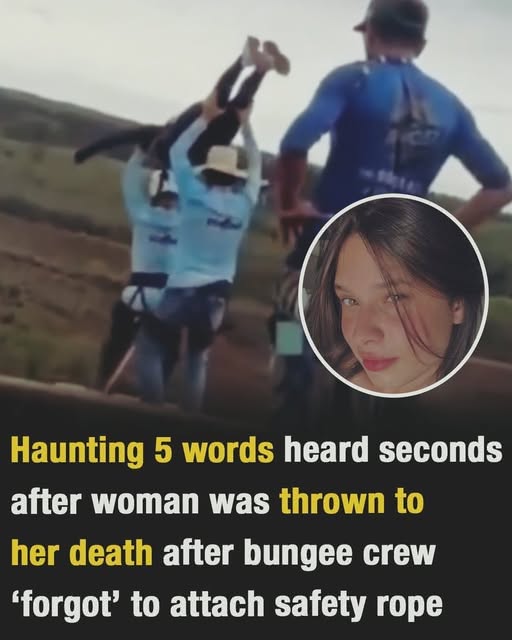
The air in Limeira, Brazil, was thick with the adrenaline of a Saturday afternoon at the infamous ‘Skeleton Bridge,’ a site where thrill-seekers usually find their peak. Maria Eduarda Rodrigues de Freitas, only twenty-one, stood at the precipice, trusting the crew to secure her life to the elastic cord. But as she leaned into the void, the sickening realization hit the crowd in a heartbeat—the safety line was never attached, and the only sound left was… Continue Reading ⬇️
The aftermath was a scene of absolute chaos. As the realization rippled through the onlookers, panic replaced the excitement. Reports indicate that those responsible for the jump were in a state of total disarray, with some even attempting to flee the scene as the weight of their negligence became undeniable. Law enforcement arrived to find a grieving fiancé and a crowd of shell-shocked witnesses, all forced to confront the reality that a standard safety protocol had been ignored.
The subsequent investigation has peeled back layers of systemic failure. During questioning, staff members offered chilling testimony, suggesting that safety checks were treated as a collective responsibility rather than an individual duty. This lack of accountability meant that no single person felt the burden of verifying the harness, leading to the fatal assumption that someone else had already done it. It is a grim reminder that in high-stakes environments, when everyone is responsible, often no one is.
The tragedy at the Skeleton Bridge has left a scar on the community, a permanent reminder of how quickly a life can be extinguished when vigilance fails. As the legal system works to determine culpability, the memory of Maria remains a call for stricter enforcement and a demand for a culture of safety that never compromises. Her death was not just an accident; it was a wake-up call for an entire industry that must now reckon with the heavy price of its own negligence.
ADVERTISEMENT
