ADVERTISEMENT
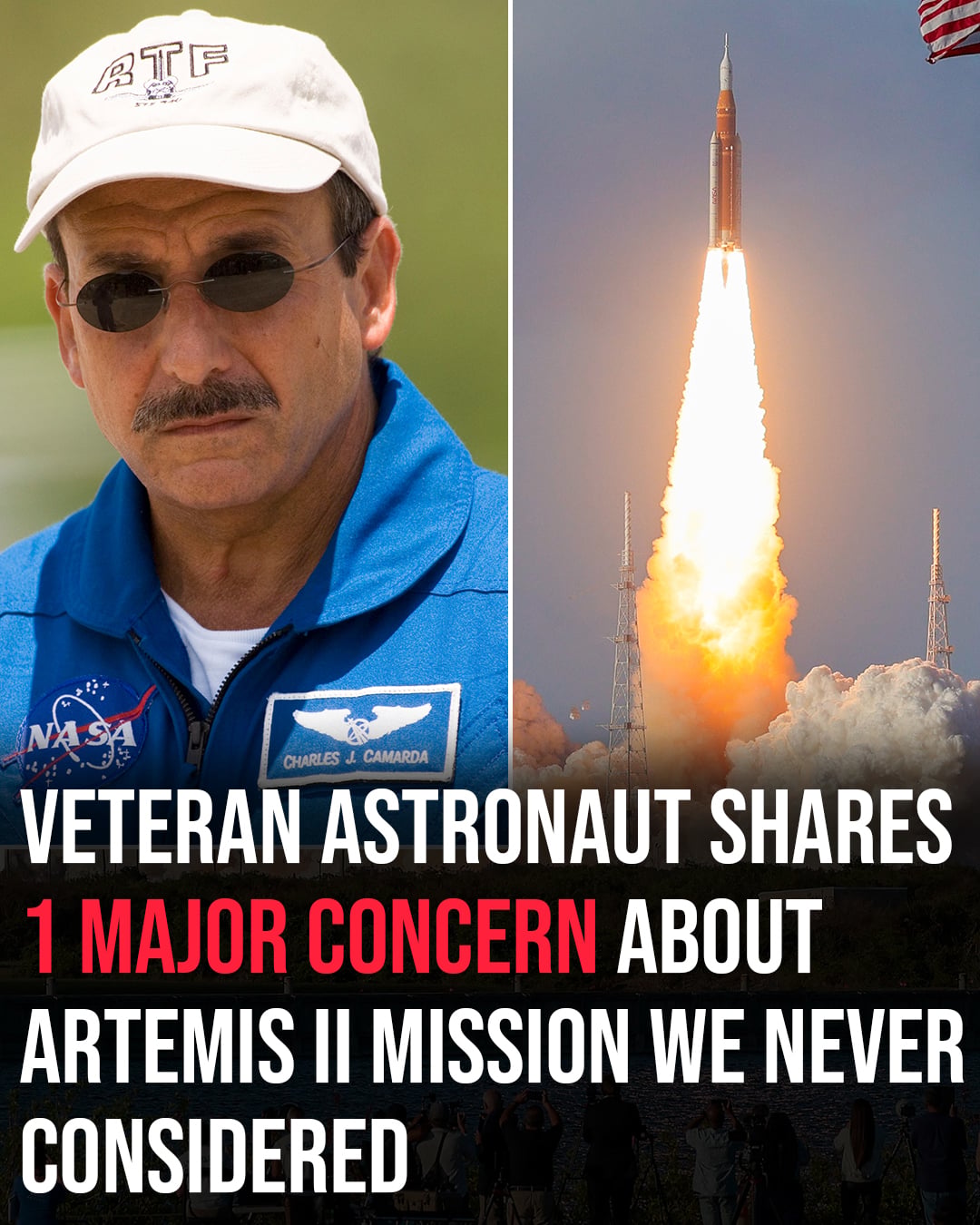
The roar of rocket engines is once again beginning to echo through the corridors of NASA as the Artemis II mission prepares to return humanity to the lunar vicinity. It is a time of immense national pride and scientific anticipation, marking the first time since the Apollo era that human beings will venture beyond low Earth orbit. However, beneath the glossy press releases and the heroic imagery of the four-member crew, a haunting voice from the agency’s past is rising to offer a sobering reality check. Charles Camarda, a veteran NASA astronaut who knows the heavy price of institutional failure, is sounding a profound alarm. His concern is not merely about a loose bolt or a faulty sensor; it is about a deep-seated cultural rot that he fears could turn this triumphant return into a historic catastrophe.
The Artemis II mission is a daring leap, intended to carry a crew of four around the Moon and back to Earth to test the Orion spacecraft’s life-support systems in deep space. It is the bridge to a permanent human presence on the lunar surface. Yet, Camarda’s warning cuts through the celebration like a knife. He argues that the true threat to the crew isn’t just the harsh vacuum of space or the radiation of the Van Allen belts; it is the human element. He vividly recalls the mindset that allowed danger to be minimized in the past—where difficult questions from engineers were softened by middle management and where dissenting voices were viewed as inconvenient hurdles to a launch schedule. To Camarda, the bureaucratic inertia and the pressure to meet political deadlines are far more dangerous than the physical challenges of the mission.
He points specifically to the aging technology underpinning the Space Launch System (SLS) and the persistent glitches within the Orion capsule. While the SLS is often touted as the most powerful rocket ever built, it relies heavily on updated versions of Space Shuttle-era technology. Camarda does not view these technical hurdles as reasons to mock the mission, but as vital red flags that require absolute transparency. Recent reports of a toilet malfunction on the Orion spacecraft might seem like a minor, humorous footnote to the general public, but to a veteran like Camarda, every “glitch” is a symptom of a larger system that must be scrutinized. Spaceflight is fundamentally unforgiving; there is no room for “good enough” when humans are 250,000 miles away from home.
The crew of Artemis II—Commander Reid Wiseman, Pilot Victor Glover, Mission Specialist Christina Koch, and Mission Specialist Jeremy Hansen—represents the best of humanity’s courage and skill. Camarda praises these individuals for their bravery, noting that they are willing to put their lives on the line for the sake of discovery. However, he insists that their courage must be matched by an agency willing to question itself before the universe does. If NASA is unwilling to listen to the warnings of its veterans, it risks sending these heroes into a situation where the odds are stacked against them by human error rather than cosmic chance.
The “Artemis generation” is standing on the shoulders of giants, but Camarda is reminding everyone that those giants were human and fallible. He reflects on the foam strike that shattered Columbia, noting that it wasn’t the foam itself that killed the astronauts, but the decision to ignore the foam’s potential for damage over years of successful flights. He sees similar patterns today, where small issues with heat shields or life support systems might be overlooked because the previous uncrewed Artemis I mission was deemed a success. This “success bias” is exactly what led to past tragedies, and Camarda is determined to ensure that the lessons of the past are not buried under the excitement of the future.
The veteran’s warning serves as a vital counterbalance to the inevitable hype of a multi-billion-dollar space program. It is a reminder that behind every spectacular launch photo is a complex web of human decisions. Charles Camarda wants the Artemis II mission to be a success more than anyone, but he knows that a true success is one where the crew returns safely because every possible precaution was taken. He is calling for a reclamation of the Apollo-era rigor, where dissent was not only tolerated but encouraged as a necessary tool for survival.
ADVERTISEMENT
